Energy Use Case 1: How Cortex Can Tackle Power Theft Head-On
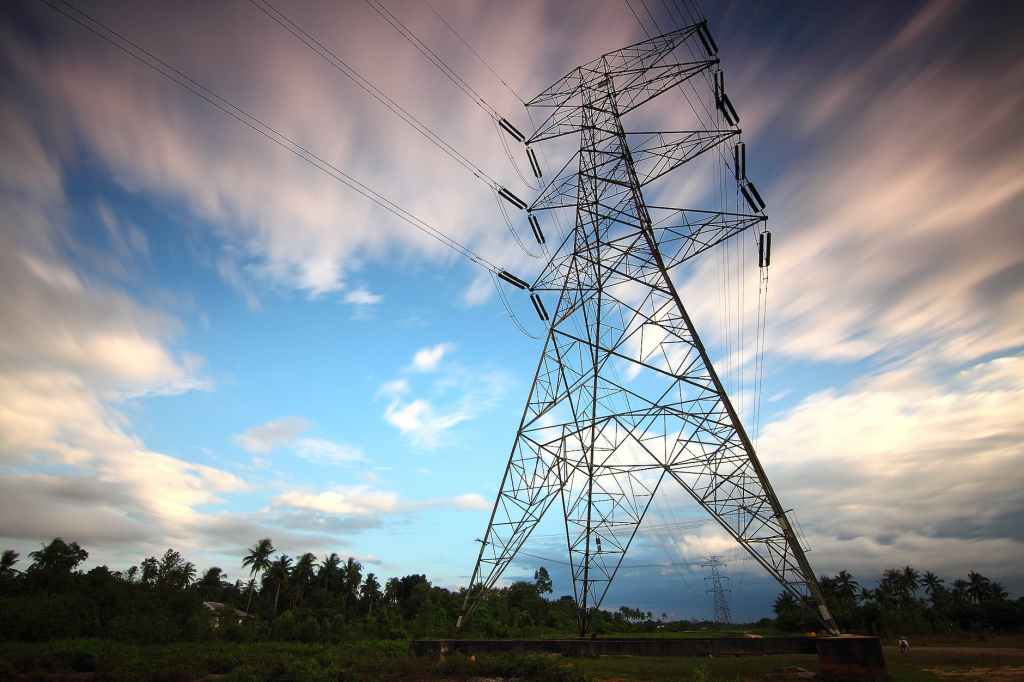
Ever wondered how energy companies are fighting the sneaky issue of power theft? It’s a big deal because stolen power means higher costs for everyone else and can even affect how reliable your electricity is. In this series, we’re looking at two cool ways Cortex, the real-time data processing engine is making a real difference in energy industry. First up: let’s dive into how it’s helping catch and stop power theft.
Pain Point – Power Theft:
The energy company faces challenges in identifying power theft, which leads to revenue losses and operational inefficiencies. Traditional methods of detection are often reactive and time-consuming.
Cortex Integration:
- SCADA System: Provides real-time electricity consumption data across the grid.
- Weather Data Service: Offers historical and current weather condition data relevant to energy consumption patterns.
- Customer Profile Database: Contains information on each customer’s typical energy usage patterns, based on historical data.
Data Feed to Cortex:
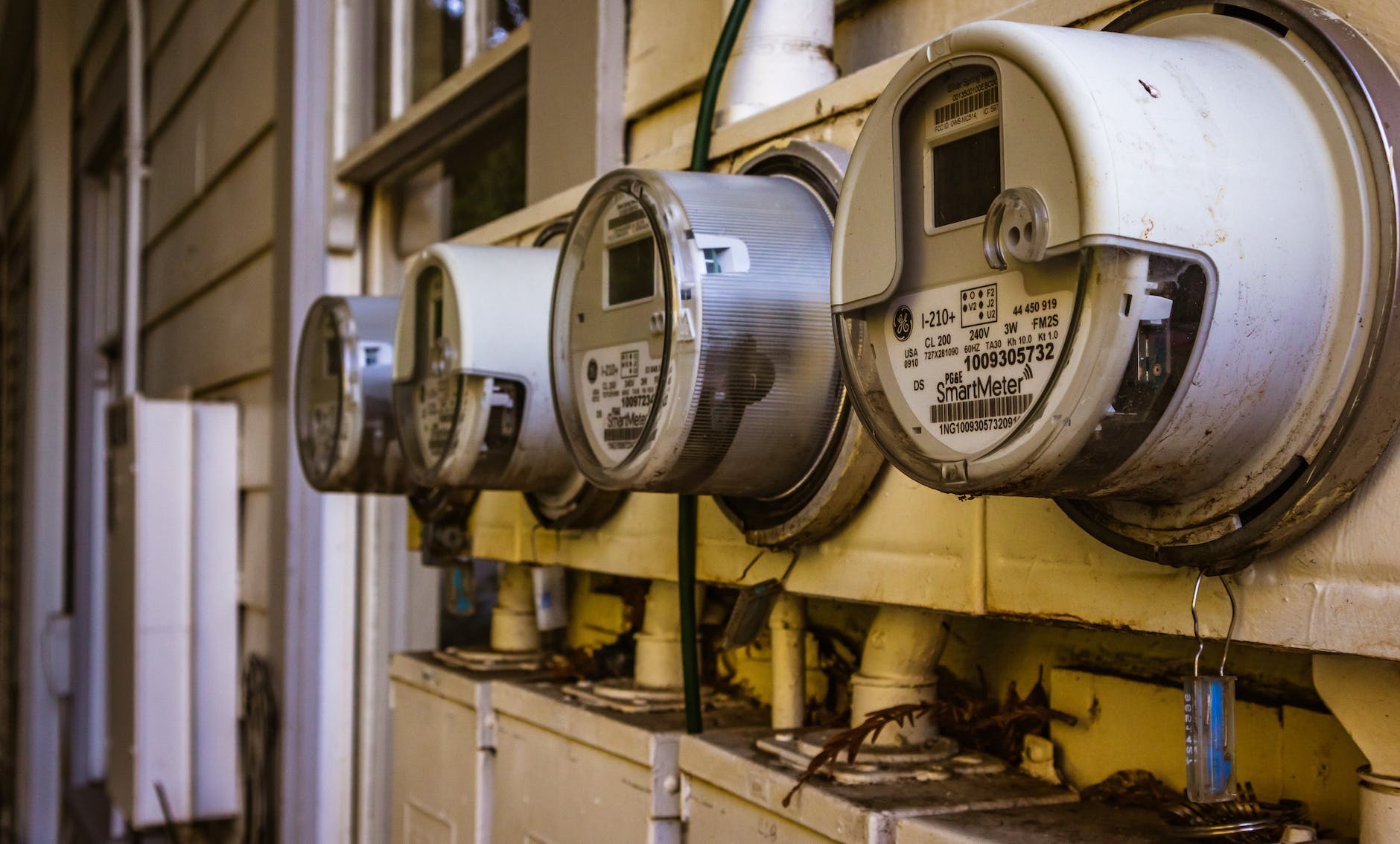
- From SCADA System: Real-time meter readings for each customer endpoint.
- From Weather Data Service: Current weather conditions, including temperature, which significantly affect energy consumption.
- From Customer Profile Database: Historical average consumption data for similar time periods, adjusted for customer growth.
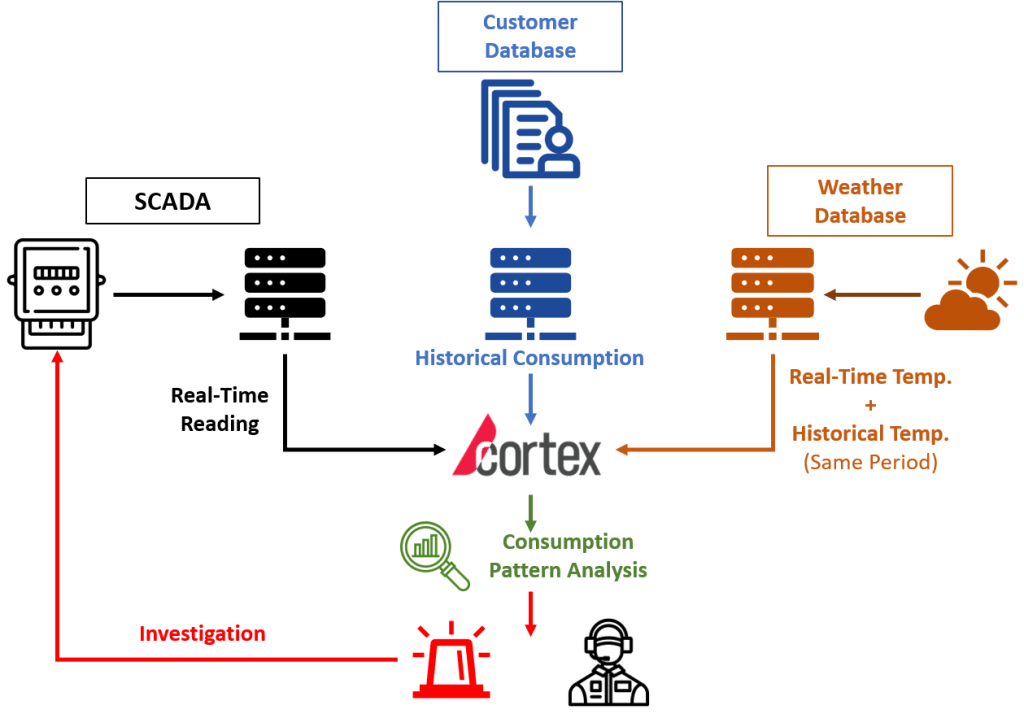
Consumption Pattern Analysis:
To detect potential power theft, Cortex performs a consumption pattern analysis with adjustments according to the factors such as weekend/weekday difference, weather and whether it is a special holiday or not. These factors can be increased or modified according to the real life case.
Historical Average Consumption (HAC)
Cortex calculates the daily expected consumption for each customer based on their profile and compares it with real-time meter readings from the SCADA system. It calculates separately for weekdays, weekends, and special days/holidays using a 7-day moving average from similar past periods.
Weather Norm (WN) and Weather Sensitivity Index (WSI)
Cortex determines the average temperature for the current period over the past years (WN) using 7-day moving average again.
Cortex calculates WSI that dynamically adjusts based on historical consumption changes relative to temperature changes. This index can be calculated for each customer based on their past responses to temperature variations.
Special Day Adjustment Factor (SDAF)
Cortex assigns a value based on historical data that reflects the average percentage change in consumption on special days or holidays compared to typical days. For example, a SDAF of 1.2 would represent a 20% increase in consumption on special days/holidays.
Expected Consumption Calculation
The final step would be adjusting the HAC based on current temperature differences from the WN using the WSI, and apply the SDAF for special days/holidays.
- Formula for regular days: Expected Consumption=HAC+(Current Temperature−WN)×WSIExpected Consumption=HAC+(Current Temperature−WN)×WSI
- Formula for special days/holidays: Expected Consumption=(HAC+(Current Temperature−WN)×WSI)×SDAFExpected Consumption=(HAC+(Current Temperature−WN)×WSI)×SDAF
- Anomaly Detection: Cortex identifies anomalies where actual consumption significantly exceeds the adjusted expected consumption. The threshold for “significant” is predefined, e.g., a difference of more than 20%.
Actions Initiated by Cortex:
- Alert Generation: For each meter flagged as suspicious, a potential power theft case, Cortex generates an alert for the grid operator.
- Investigation Workflow: Cortex triggers a workflow in the grid management system to initiate an investigation, which may include physical inspection of the meter and review of the customer’s historical consumption pattern.
- Report: Feeds the reporting system of the company showing suspicious consumption patterns.
Potential Benefits:
- Reduced Revenue Loss: Early detection and prevention of power theft directly contribute to reducing revenue losses.
- Operational Efficiency: Automating theft detection streamlines operations, allowing the energy company to allocate resources more effectively.
- Enhanced Grid Reliability: Identifying and addressing theft helps maintain the integrity and reliability of the power grid.
Example Case:
- Scenario: Cortex receives data indicating that Customer X’s meter reading shows a consumption of 500 kWh in a 24-hour period. It is Monday, but it is a national holiday in the country.
- Analysis: Cortex adjusts the expected consumption for the current conditions as below:
- Historical Weekday HAC: 300 kWh/day
- Current Temperature: 30°C
- Weather Norm (WN): 25°C
- Weather Sensitivity Index (WSI) for Customer X: 2 kWh/°C
- Special Day Adjustment Factor (SDAF): 1.2 (assuming today is a special day)
- Expected Consumption for Today (Special Day): (300+(30−25)×2)×1.2=372 kWh(300+(30−25)×2)×1.2=372 kWh
- Given that e.g. 20% difference as a treshold for flagging cases for suspicious, 34.4% difference in this case is exceeding the trehsold.
- Action: Cortex flags this meter as suspicious and sends an alert to the grid operator for further investigation.
- Result: The grid operator investigates and discovers an illegal connection to the customer’s meter. The issue is resolved, preventing future theft.
This use case demonstrates how Cortex can leverage data from SCADA systems and other sources to enhance the energy distribution industry’s ability to detect and prevent power theft, leading to improved efficiency and reduced losses.
Conclusion:
We’ve just seen how smart tech like Cortex isn’t just about catching the bad guys stealing power; it’s about making sure there’s enough to go around fairly and keeping costs down for everyone. But there’s more to the story. In our next piece, we’ll check out how the same tech helps keep the lights on by making sure power supply and demand match up perfectly. Curious? Stay tuned for the next part of our tech journey.
Need more details to see how Cortex may enhance your business? Explore Cortex’s features or book a free discovery session with our proffesionals.

Aykut Teker
Aykut Teker is the co-founder of Selfuel, redefining innovation in data operations. Building on his extensive experience in enterprise and global R&D leadership, combined with a Ph.D. in theoretical and computational physics; he spearheads research and plays a pivotal role in shaping Selfuel’s groundbreaking, accessible, and scalable data processing platform.
 EN
EN
One thought on “Energy Use Case 1: How Cortex Can Tackle Power Theft Head-On”
Comments are closed.